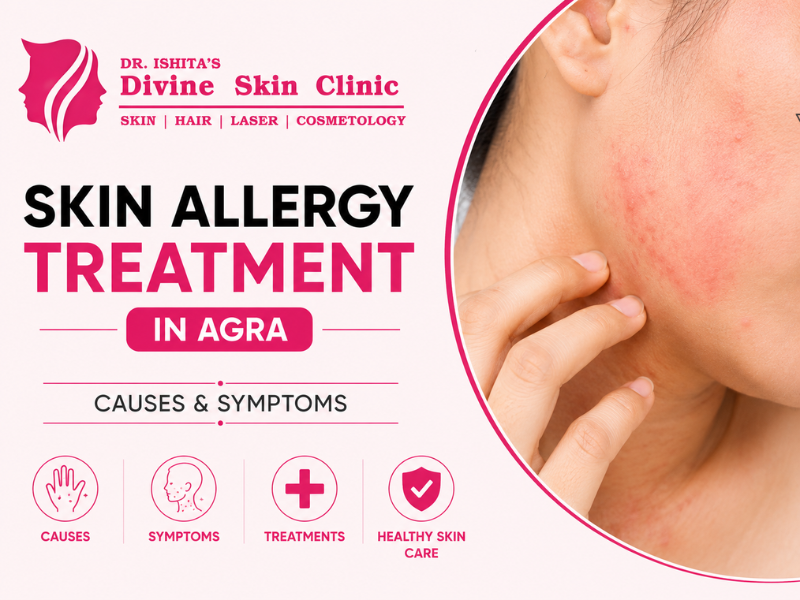
Skin allergies can appear suddenly or develop gradually. Redness, itching, rashes, swelling, or irritation may leave you wondering what caused the reaction and whether it needs medical attention. While some mild skin reactions settle on their own, persistent or recurring symptoms may require professional evaluation.
If you are looking for skin allergy treatment in Agra, understanding the common symptoms, possible triggers, and warning signs can help you decide when to consult a dermatologist.
At Dr. Ishita’s Divine Skin Clinic, Agra, skin concerns are assessed individually so that treatment can be planned according to the symptoms, skin condition, and possible underlying cause.
What Is a Skin Allergy?
A skin allergy occurs when the body’s immune system reacts to a substance that it considers harmful, even though that substance may not cause a reaction in most people.
The reaction can affect different areas of the body and may appear as itching, redness, bumps, swelling, or a rash.
Common triggers can include certain skincare products, cosmetics, fragrances, metals, fabrics, plants, medicines, or other substances that come into contact with the skin.
Not every rash is an allergy, however. Infections, eczema, heat-related irritation, and other skin conditions can cause similar symptoms. This is why persistent or unexplained skin problems deserve proper assessment.
Common Symptoms of Skin Allergy
Skin allergies can produce different symptoms depending on the trigger and individual sensitivity.
1. Itching
Persistent itching is one of the most common symptoms. You may feel an urge to scratch the affected area, especially at night or after exposure to a particular trigger.
Repeated scratching can further irritate the skin and may make the symptoms worse.
2. Redness
An allergic reaction may cause patches of red or inflamed skin. The affected area can vary in size and may appear suddenly.
3. Skin Rash
Some allergies produce small bumps, patches, or widespread rashes. The appearance can differ depending on the type of reaction.
4. Swelling
Certain allergic reactions can cause swelling around the affected area. Facial or lip swelling requires particular attention, especially if it develops suddenly.
5. Dry or Irritated Skin
Some reactions may leave the skin dry, rough, flaky, or uncomfortable. The symptoms can continue if exposure to the triggering substance does not stop.
6. Burning or Stinging
Some people experience a burning or stinging sensation along with redness or irritation.
What Causes Skin Allergies?
A skin allergy can have many possible triggers. Identifying the trigger can be an important part of managing recurring reactions.
Common triggers include:
- Cosmetics and makeup
- Fragrances and perfumes
- Skincare products
- Hair dyes
- Soaps and detergents
- Jewellery or metals such as nickel
- Certain fabrics
- Plants
- Medicines
- Adhesives
- Personal care products
In some cases, the trigger may not be obvious. You may develop symptoms hours after exposure, making it difficult to identify the substance responsible.
Keeping track of new products or substances that come into contact with your skin can sometimes help identify a possible connection.
Common Types of Skin Allergic Reactions
Skin allergy can present in different ways.
Contact Dermatitis
Contact dermatitis develops when the skin reacts after coming into contact with a particular substance.
It may cause redness, itching, dryness, swelling, or a rash. Cosmetics, fragrances, metals, soaps, and cleaning products are some possible triggers.
Hives
Hives appear as raised, itchy patches or bumps on the skin. They can develop suddenly and may change location over time.
Different factors can trigger hives, including certain foods, medicines, infections, environmental factors, or other triggers.
Eczema-Like Reactions
Some allergic or inflammatory skin reactions can cause dryness, itching, scaling, and irritation.
Because several skin conditions can produce similar symptoms, professional evaluation can help determine the likely cause.
Skin Allergy vs Skin Infection: Why Diagnosis Matters
A red or itchy rash does not always mean you have a skin allergy.
Fungal infections, bacterial infections, eczema, insect bites, heat rash, and other dermatological conditions can look similar.
Using the wrong cream or repeatedly trying different products without knowing the cause may irritate the skin further.
A dermatologist can examine the affected area, consider your symptoms and medical history, and determine the most appropriate course of action.
When Should You See a Dermatologist?
Mild irritation may improve after avoiding a suspected trigger. However, you should consider consulting a dermatologist if the symptoms:
- Continue for several days
- Keep returning
- Spread to other areas
- Cause significant itching
- Cause swelling
- Interfere with sleep or daily activities
- Do not improve after avoiding a suspected trigger
- Develop after using a new skincare or cosmetic product
- Are accompanied by other unusual symptoms
Recurring skin allergies may need a more detailed evaluation to identify possible triggers and rule out other skin conditions.
When Is a Skin Allergy an Emergency?
Some allergic reactions can become serious.
Seek urgent medical attention if a sudden allergic reaction causes difficulty breathing, difficulty swallowing, severe facial or throat swelling, dizziness, or fainting.
These symptoms can indicate a serious allergic reaction and require immediate medical care rather than routine dermatology consultation.
How Can You Reduce the Risk of Skin Allergies?
You cannot always prevent a skin allergy, especially when the trigger is unknown. However, a few practical habits may help reduce unnecessary irritation.
Avoid Known Triggers
If you already know that a particular product or substance causes a reaction, avoid further exposure whenever possible.
Be Careful With New Products
Introduce new skincare and cosmetic products carefully. Using multiple new products at once can make it difficult to identify which product caused irritation.
Read Product Labels
Pay attention to ingredients if you have previously experienced reactions to particular substances.
Do Not Scratch
Scratching can damage the skin and increase irritation. Keeping nails short can also reduce skin damage caused by accidental scratching.
Avoid Unnecessary Self-Treatment
Using random creams or combining multiple products can sometimes worsen irritation or hide important symptoms.
If a rash continues or repeatedly returns, professional evaluation is a better option.
Skin Allergy Treatment in Agra
Treatment for a skin allergy depends on the type of reaction, its severity, and the suspected trigger.
A dermatologist may recommend measures to reduce inflammation and itching, protect the skin barrier, and prevent further exposure to the trigger.
For recurring symptoms, identifying and avoiding the responsible substance can become an important part of long-term management.
Because different conditions can look similar, treatment should follow a proper dermatological assessment rather than relying solely on online information.
You can learn more about Dr. Ishita Raka Pandit, Dermatologist in Agra.
Skin Allergy Care at Dr. Ishita’s Divine Skin Clinic, Agra
Dr. Ishita’s Divine Skin Clinic in Agra provides dermatological care for a wide range of skin concerns, including skin allergies and chronic skin conditions.
Dr. Ishita Raka Pandit is a dermatologist, aesthetic dermatologist, dermatosurgeon, and trichologist. She focuses on understanding each patient’s symptoms and skin concerns before recommending appropriate care.
If you have a persistent, recurring, or unexplained rash, professional assessment can help determine whether it is an allergy or another dermatological condition.
Related Pages
- Dr. Ishita Raka Pandit – Dermatologist in Agra
- Dermatological Conditions Treated in Agra
- Acne and Pimples Treatment in Agra
- Contact Divine Skin Clinic, Agra
Frequently Asked Questions About Skin Allergy
1. What are the most common symptoms of a skin allergy?
Common symptoms include itching, redness, rashes, swelling, dryness, burning, and skin irritation. Symptoms can vary depending on the trigger and type of reaction.
2. What commonly causes skin allergies?
Skincare products, cosmetics, fragrances, hair dyes, soaps, detergents, metals, medicines, plants, and certain fabrics can trigger allergic reactions in some people.
3. How do I know if my rash is an allergy?
A rash can have many causes, and appearance alone may not confirm an allergy. A dermatologist can evaluate your symptoms and medical history to identify the likely cause.
4. Can skin allergies go away on their own?
Some mild reactions may improve after you stop exposure to the suspected trigger. Persistent or recurring symptoms should be evaluated by a dermatologist.
5. Can a new skincare product cause a skin allergy?
Yes. Certain ingredients in skincare or cosmetic products can trigger irritation or an allergic reaction in sensitive individuals.
6. Should I stop using a product that causes itching or redness?
If a product consistently causes a reaction, stopping its use and seeking professional advice can help prevent further irritation and identify the possible trigger.
7. When should I see a dermatologist for a skin allergy?
Consult a dermatologist when symptoms persist, repeatedly return, spread, cause significant discomfort, or do not improve after avoiding a suspected trigger.
8. Where can I get skin allergy treatment in Agra?
You can consult Dr. Ishita Raka Pandit at Divine Skin Clinic, Agra for evaluation and personalised care for persistent or recurring skin concerns.
Conclusion
Skin allergies can be uncomfortable, frustrating, and difficult to identify when the trigger is unclear. Itching, redness, rashes, swelling, and irritation may have several possible causes, so identifying the underlying problem is important.
Avoid known triggers, be careful when introducing new skincare products, and avoid unnecessary self-treatment. If your symptoms persist or keep returning, consult a qualified dermatologist.
If you are searching for skin allergy treatment in Agra, Dr. Ishita’s Divine Skin Clinic can help you understand your skin concerns and explore appropriate treatment and care based on your individual needs.