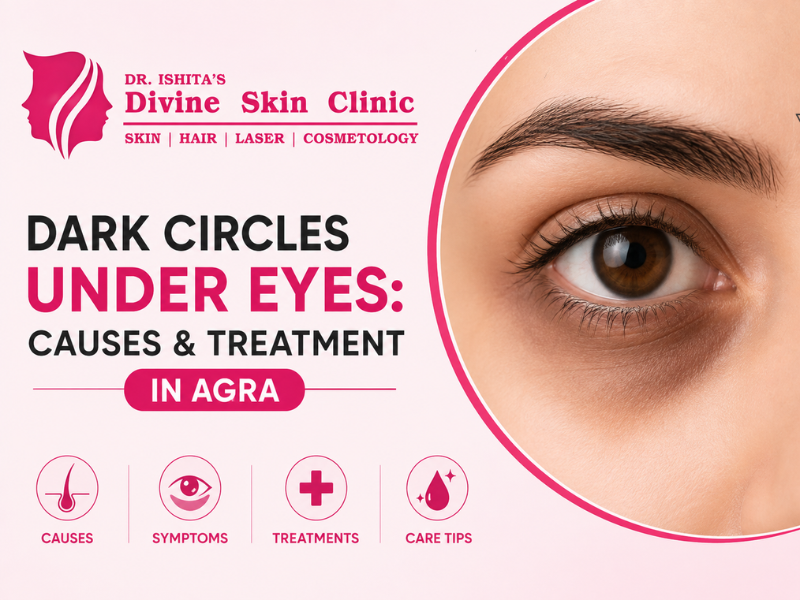
Dark circles under the eyes are a common skin concern that can make the face look tired, dull, or stressed even when you feel well-rested. They can affect people of all ages and may develop for different reasons, including genetics, lifestyle, pigmentation, allergies, ageing, or changes in the skin around the eyes.
While lack of sleep is often blamed for dark circles, it is not always the only cause. Understanding why dark circles have developed is important before choosing a treatment.
At Dr. Ishita’s Divine Skin Clinic in Agra, dark circles can be evaluated based on their appearance, possible underlying causes, skin type, and individual concerns.
What Are Dark Circles Under the Eyes?
Dark circles refer to a darker or shadowed appearance of the skin beneath or around the eyes. They may appear brown, grey, blue, purple, or almost black depending on the person’s skin tone and the underlying cause.
Dark circles may occur on their own or along with:
- Under-eye pigmentation
- Puffiness
- Fine lines
- Hollow-looking areas
- Thin or delicate under-eye skin
- A tired-looking appearance
Because several factors can contribute to under-eye darkness, the same treatment may not be suitable for everyone.
What Causes Dark Circles Under the Eyes?
1. Genetics
Some people are naturally more likely to develop dark circles because of their genes. If dark circles are common among family members, they may become noticeable from an early age.
Genetics can influence skin pigmentation, skin thickness, facial structure, and the appearance of blood vessels beneath the eyes.
2. Lack of Sleep
Poor or irregular sleep can make dark circles appear more noticeable. Tiredness may also make the skin look dull and can increase the contrast between the under-eye area and the rest of the face.
However, simply getting more sleep may not completely remove dark circles when other factors are involved.
3. Allergies and Eye Rubbing
Allergies can cause itching and irritation around the eyes. Frequent rubbing or scratching may further irritate the delicate skin and potentially make the area appear darker.
If dark circles are accompanied by itchy, watery, or irritated eyes, it is important to consider allergies or another underlying cause.
4. Sun Exposure
Regular sun exposure can stimulate pigmentation and make existing dark areas more noticeable.
Because the skin around the eyes is delicate, consistent sun protection is an important part of maintaining healthier-looking skin.
5. Ageing
As we age, changes in skin thickness, collagen, elasticity, and facial volume can affect the appearance of the under-eye area.
In some people, shadows caused by natural changes around the eyes may make the area appear darker even when there is little actual pigmentation.
6. Dehydration and Lifestyle Factors
Not drinking enough fluids, excessive screen time, poor sleep routines, smoking, and an unbalanced lifestyle may contribute to a tired-looking appearance.
These factors may not be the sole cause of dark circles, but improving overall lifestyle habits can support healthier-looking skin.
7. Skin Pigmentation
In some individuals, increased pigmentation around the eyes may be responsible for dark circles. This can be more noticeable in people who naturally develop pigmentation easily.
A dermatologist can help determine whether the darkness is primarily related to pigmentation or another factor.
Types of Dark Circles
Dark circles do not look the same in everyone. Understanding their appearance can help identify possible contributing factors.
Pigmented Dark Circles
These usually appear brown or darker than the surrounding skin and may be related to increased pigmentation.
Vascular Dark Circles
These may have a bluish, purple, or reddish appearance due to visible blood vessels beneath thin under-eye skin.
Structural or Shadowing Dark Circles
Changes in facial structure, under-eye hollows, puffiness, or ageing can create shadows that make the area look darker.
Mixed Dark Circles
Many people have more than one contributing factor. For example, pigmentation combined with under-eye hollowness may create a more noticeable dark appearance.
Can Dark Circles Be Removed Completely?
There is no single treatment that can completely remove dark circles for everyone.
The result depends on the underlying cause, skin type, age, genetics, lifestyle, and whether pigmentation, vascular visibility, or facial structure is contributing to the appearance.
The first step is therefore to understand what is causing the dark circles rather than choosing a treatment based solely on online recommendations.
Treatment Options for Dark Circles
Treatment depends on the individual’s specific concern.
A dermatologist may recommend suitable skincare, lifestyle changes, or professional treatments depending on whether pigmentation, skin texture, ageing, or another factor is involved.
Possible approaches may include:
- Targeted skincare for under-eye concerns
- Sun protection
- Treatment for underlying allergies or irritation
- Professional skin treatments where appropriate
- Treatments aimed at pigmentation
- Procedures designed to improve the appearance of skin texture
- Other personalised options based on facial structure and individual needs
Not every treatment is appropriate for the delicate skin around the eyes. Professional assessment is particularly important before using strong products or undergoing cosmetic procedures in this area.
How Can You Reduce the Appearance of Dark Circles at Home?
Simple habits can help support the health and appearance of the under-eye area:
- Maintain a consistent sleep routine
- Use appropriate sun protection
- Avoid rubbing or scratching the eyes
- Keep the skin adequately moisturised
- Manage known allergies appropriately
- Maintain a balanced diet
- Stay adequately hydrated
- Avoid using harsh products around the eyes
- Do not use strong skin-lightening products without professional advice
These measures may help improve the overall appearance of the skin, but they may not eliminate dark circles caused by genetics, pigmentation, ageing, or facial structure.
When Should You See a Dermatologist?
Consider consulting a dermatologist if:
- Dark circles have become noticeably darker
- The problem persists despite healthy lifestyle changes
- You have significant pigmentation around the eyes
- Dark circles are accompanied by itching or irritation
- You also have under-eye puffiness or visible hollowness
- The change appeared suddenly or unexpectedly
- You are considering professional treatment
- Dark circles are affecting your confidence
A dermatologist can assess the under-eye area and help identify the factors contributing to its appearance.
Why Choose Dr. Ishita Raka Pandit for Skin Concerns in Agra?
Dr. Ishita Raka Pandit is a dermatologist, aesthetic dermatologist, dermatosurgeon, and trichologist practising at Divine Skin Clinic, Agra. With more than 11 years of experience in dermatology and aesthetic medicine, she provides personalised care for a range of skin concerns.
At Divine Skin Clinic, treatment recommendations are based on individual skin concerns, skin type, and the factors contributing to the problem rather than using a one-size-fits-all approach.
If you are looking for a dermatologist in Agra for dark circles or other skin concerns, professional evaluation can help you understand the most suitable options for your skin.
Frequently Asked Questions About Dark Circles
What is the main cause of dark circles?
There is no single cause. Genetics, pigmentation, lack of sleep, allergies, sun exposure, ageing, skin thickness, and facial structure can all contribute.
Can lack of sleep cause dark circles?
Poor sleep can make dark circles look more noticeable, particularly when the skin appears dull or tired. However, persistent dark circles may have other causes as well.
Can dark circles be removed naturally?
Healthy sleep, sun protection, avoiding eye rubbing, adequate hydration, and good skincare may help improve the appearance of some dark circles. However, genetic or structural dark circles may require professional evaluation.
Are dark circles a sign of a health problem?
Dark circles are usually a cosmetic concern, but they can sometimes occur alongside allergies, irritation, or other conditions. If they appear suddenly or with other unusual symptoms, professional advice is recommended.
Is it safe to use skin-lightening products under the eyes?
The skin around the eyes is delicate. Avoid applying strong or unsuitable products without professional guidance, as they may cause irritation or other problems.
What is the best treatment for dark circles?
The best approach depends on the cause. Pigmentation, visible blood vessels, hollowness, puffiness, and ageing may require different approaches. A dermatologist can help determine which option is appropriate.
How long does it take to improve dark circles?
The timeframe varies depending on the cause and the approach used. Some lifestyle-related concerns may improve gradually, while pigmentation and structural concerns can require longer-term management.
Take the First Step Towards Healthier-Looking Under-Eyes
Dark circles can have more than one cause, which is why identifying the underlying reason is important before starting treatment. What works for pigmentation may not work for structural shadows or genetic dark circles.
If you are concerned about dark circles under your eyes in Agra, consider consulting a qualified dermatologist for personalised advice.
https://divineskinclinicagra.com/contact-divineskin-agra.html