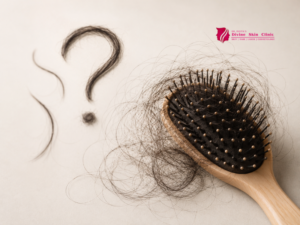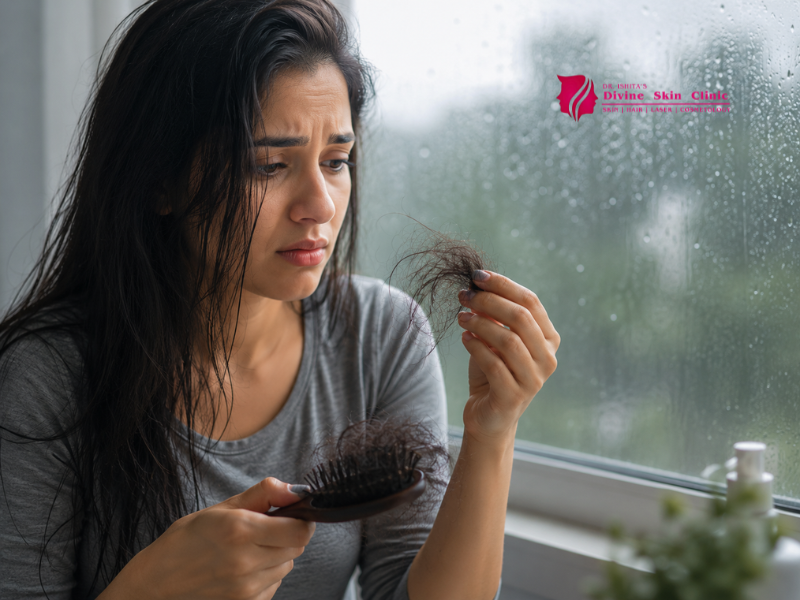
Many people notice more hair on their pillow, comb, or bathroom floor during the rainy season. While losing some hair every day is normal, an increase in hair fall during monsoon can be worrying.
The rainy season brings higher humidity, moisture, and changes in the environment that can affect your scalp and hair. Along with daily habits, these changes may make hair feel weaker and increase hair fall in some people.
The good news is that seasonal hair fall is often manageable with the right hair care routine and timely guidance from a dermatologist.
Why Does Hair Fall Increase During the Rainy Season?
There isn’t just one reason. Several everyday factors can contribute to increased hair fall during monsoon.
1. Excess Moisture Can Affect the Scalp
The rainy season brings high humidity, which can make the scalp feel oily and sticky.
When the scalp isn’t kept clean, dirt and excess oil can build up more easily, making the hair feel heavy and unhealthy.
Maintaining a clean scalp is one of the simplest ways to support healthy hair.
2. Rainwater May Not Be as Clean as It Looks
Getting caught in the rain occasionally may not always cause problems, but rainwater can contain dust and pollutants collected from the atmosphere.
If rainwater remains on your scalp for a long time, it may affect scalp hygiene.
If your hair gets wet in the rain, rinse it with clean water and dry it gently as soon as possible.
3. A Damp Scalp Is Not Healthy
Many people tie their hair or cover it while it is still wet.
Keeping the scalp damp for long periods can create an unhealthy environment for the scalp.
Always allow your hair to dry properly before tying it or going to bed.
4. Washing Hair Too Frequently
Some people wash their hair every day during the rainy season because it feels oily.
While keeping the scalp clean is important, excessive washing may leave hair feeling dry and difficult to manage.
Choose a balanced routine that suits your hair type.
5. Lifestyle Habits Can Affect Hair Health
Your hair reflects your overall well-being.
Poor sleep, stress, dehydration, and an unhealthy routine can all contribute to increased hair fall.
A healthy lifestyle supports stronger hair throughout the year.
6. Poor Scalp Hygiene
Sweat, oil, and environmental dirt can collect on the scalp more quickly during monsoon.
Regular cleansing and proper hair care help maintain a healthy scalp.
7. Seasonal Changes Affect Everyone Differently
Just as your skin reacts differently during different seasons, your hair can also respond to weather changes.
Some people experience only mild hair fall, while others notice more shedding during the rainy months.
If hair fall continues even after the season changes, it is advisable to seek professional advice.
Simple Tips to Care for Your Hair During the Rainy Season
Healthy hair starts with simple daily habits.
Here are a few practical tips:
- Wash your hair regularly based on your hair type.
- Dry your hair gently after getting wet.
- Avoid tying wet hair.
- Keep combs and hair accessories clean.
- Stay hydrated.
- Eat a balanced diet.
- Get enough sleep.
- Manage daily stress.
- Avoid pulling or tying hair too tightly.
Small changes in your routine can make a noticeable difference over time.
When Should You Visit a Dermatologist?
Seasonal hair fall is common, but you should consult a dermatologist if:
- Hair fall continues for several weeks.
- Hair appears noticeably thinner.
- You notice excessive shedding every day.
- Hair fall affects your confidence.
- Home care is not helping.
Early evaluation helps identify the cause and provides guidance suited to your individual hair concerns.
Looking for Expert Hair Care in Agra?
At Dr. Ishita’s Divine Skin Clinic, we provide personalised care for a wide range of hair and scalp concerns.
Every individual has different hair needs, which is why understanding the cause of hair fall is the first step toward healthier hair.
Learn more about our clinic and services:
Website: https://divineskinclinicagra.com/
Read More Blogs: https://divineskinclinicagra.com/blog/
Book an Appointment: https://divineskinclinicagra.com/contact-divineskin-agra.html
Frequently Asked Questions
Is hair fall during the rainy season normal?
Yes. Many people notice slightly increased hair fall during the rainy season because of humidity, moisture, and seasonal changes.
How can I reduce hair fall during monsoon?
Keep your scalp clean, dry your hair properly after getting wet, maintain a healthy lifestyle, and follow a suitable hair care routine.
Should I wash my hair after getting wet in the rain?
Yes. It is generally a good idea to rinse your hair with clean water after getting caught in the rain and dry it gently.
Is it okay to tie wet hair?
No. Wet hair is more delicate and keeping the scalp damp for long periods is not recommended.
Can stress increase hair fall?
Yes. Daily stress may affect overall hair health and contribute to increased hair shedding in some people.
When should I consult a dermatologist for hair fall?
If hair fall becomes excessive, continues for several weeks, or you notice visible thinning, it is advisable to seek professional guidance.
Does oily scalp cause hair fall?
An oily scalp does not always cause hair fall, but maintaining good scalp hygiene is important for overall hair health.
Can seasonal hair fall be prevented?
While seasonal changes cannot always be avoided, following healthy hair care habits may help reduce excessive hair fall.